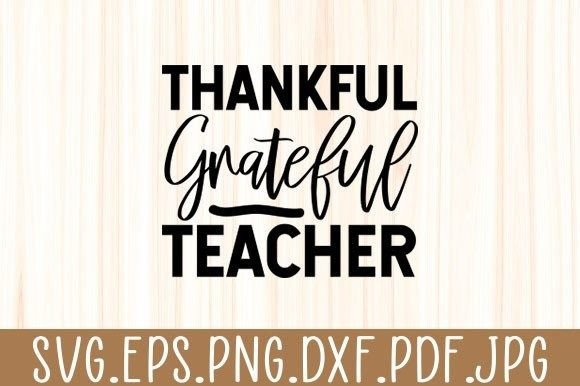
Thankful Grateful Teacher SVG: An Embroidery Review
As a professional embroidery designer and product reviewer, I approach every new digital asset with a specific question: will this actually stitch out beautifully on real fabric? When evaluating the Thankful Grateful Teacher Svg Cut Files, my first impression is one of warmth and versatility. While this product is marketed primarily as a digital file for cutting machines like the Cricut Exp, experienced makers know that high-quality vector graphics are often the secret weapon behind successful machine embroidery design projects. The sentiment itself evokes a mood of sincere appreciation, making it an ideal candidate for seasonal school gear, teacher appreciation gifts, and boutique educational merchandise.
From a design perspective, the layout suggests a balanced composition that should translate well into thread. However, because this is originally an SVG cut file rather than a pre-digitized embroidery file, it requires a thoughtful translation process. For those of us running a craft business or managing an Etsy shop, understanding how to adapt these Graphics for needle and thread is what separates amateur results from professional, retail-ready goods. This review explores how to leverage this design for tangible, stitched products while avoiding common pitfalls associated with converting vector art for textile use.
Real-World Application: The Custom Teacher Tote
To truly test the viability of the Thankful Grateful Teacher Svg Cut Files for embroidery, I visualized a specific project: a custom canvas tote bag intended as an end-of-year gift for a classroom teacher. Totes are a staple handmade product, but they present unique challenges due to fabric texture and weight. In this scenario, the design needs to be legible from a distance while maintaining delicate details up close.
If I were digitizing this SVG for a tote bag design, I would likely treat the lettering as a combination of satin stitch borders and fill stitch interiors to ensure coverage on the coarse canvas weave. The phrase "Thankful Grateful" offers excellent hierarchy; the word "Teacher" could serve as a focal point, perhaps executed in a textured stitch to mimic chalk or handwriting. This application transforms a simple digital download into a high-value personalized gift. For an Etsy seller, this specific use case demonstrates how a single graphic asset can anchor an entire collection of custom apparel and accessories, provided the stitch-out is planned correctly.
Translating Vector Graphics to Stitch Density
It is crucial to remember that the Thankful Grateful Teacher Svg Cut Files is an instant download meant for die-cutting, not a ready-to-stitch DST or PES file. As designers, we must bridge this gap. When importing this SVG into embroidery software, pay close attention to stitch density. Vectors designed for vinyl or paper have zero tolerance for fabric pull, whereas embroidery requires compensation for tension.
For sweatshirt embroidery or fleece items, the design elements must be spaced adequately to prevent puckering. If the original SVG features intricate script or thin lines, you cannot simply run a running stitch over them and expect durability. You may need to thicken the columns during the digitizing phase to create a proper satin column. Conversely, if the design includes large solid areas suitable for an applique design, ensure your placement lines and tack-down stitches align perfectly with the cut file’s geometry. This technical diligence ensures that whether you are creating baby embroidery on a onesie or a patch for a backpack, the structural integrity of the garment remains intact.
Fabric Limitations and Hoop Considerations
Not every surface is friendly to detailed typography. When planning to use this design for holiday embroidery or school spirit wear, consider the substrate carefully. Textured fabrics like terry cloth tea towels or waffle-weave blankets can swallow fine details. If the Thankful Grateful Teacher Svg Cut Files contains delicate serifs or small accent marks, they may get lost in the pile of the fabric. In these cases, using a water-soluble topping is non-negotiable to keep the stitches sitting on top of the texture.
Hoop size selection also dictates success. While the SVG can be scaled infinitely on screen, embroidery has physical limits. Stretchy fabrics like jersey knits used in custom apparel require firm stabilization and appropriate hooping tension. If the design is too wide for your hoop, splitting it risks misalignment. Always verify the final dimensions against your machine's capabilities before committing to a commercial embroidery run. For curved surfaces like caps, the flat nature of an SVG must be warped or arched during digitizing to compensate for the hat's curvature; otherwise, the text will appear distorted when worn.
Enhancing Product Value and Brand Trust
The aesthetic quality of your stitching directly impacts customer trust and perceived value. A clean, professional execution of the Thankful Grateful Teacher Svg Cut Files signals to buyers that you respect both the craft and the recipient. Sloppy registration, thread breaks, or poor contrast choices can devalue even the most heartfelt sentiment. When listing a small shop product, high-resolution photos of the actual stitch-out are far more convincing than digital mockups alone.
Consider how thread colors interact with the fabric. High contrast is essential for readability, especially on dark garments where visibility is paramount. For a finished product destined for frequent washing, such as kitchen linens or children's clothing, ensure your thread choice is colorfast and durable. Using the right stabilizer prevents the design from distorting after laundering, preserving the professionalism of your work. This attention to detail builds brand consistency and encourages repeat business from parents, teachers, and school administrators looking for reliable design assets.
Essential Designer Notes for Safe Execution
Before listing any item featuring this design or selling the finished goods, adhere to these practical protocols:
- Test Stitch First: Never run a production batch without testing on scrap fabric identical to your final product. Check for gaps, puckering, and legibility.
- Verify Licensing: Since this is a digital cut file, confirm the license terms specifically regarding embroidery use and commercial sale of finished items versus digital redistribution.
- Check Compatibility: Ensure your embroidery software can import SVGs cleanly. Some programs may require converting the vector to a bitmap trace first.
- Mockup Validation: Use printable mockup tools to visualize placement, but always validate with a physical sew-out to judge true scale and proportion.
- Stabilizer Matching: Pair cut-away stabilizers for stretchy knits and tear-away for stable wovens. Adjust based on the fabric texture and design density.
- Detail Inspection: Zoom in on the digitized version to ensure no open nodes or overlapping stitches exist that could cause machine errors.
By treating the Thankful Grateful Teacher Svg Cut Files as a foundational blueprint rather than a finished solution, you unlock its full potential. Whether you are crafting a sentimental embroidered patch, designing nursery decor, or building a seasonal catalog for your craft business, the key lies in respecting the medium. Thoughtful adaptation, rigorous testing, and material awareness transform a simple digital graphic into a cherished, tangible expression of gratitude that stands the test of time and wear.