Happy First Day of Virtual School SVG Review
As a designer who bridges the gap between digital graphics and tangible textiles, I approach every new asset with a specific question: will this actually stitch out well? The Happy First Day of Virtual School SVG arrives as a versatile digital package, but for those of us in the embroidery and apparel decoration space, its value lies entirely in its translatability to thread. Having reviewed the file structure and visual layout, I see significant potential for this design, provided it is handled with the technical foresight required for mixed-media projects.
First Impressions: Digital Cleanliness Meets Stitch Potential
My initial assessment of the Happy First Day of Virtual School SVG focuses on line clarity and layer organization. As a graphic asset, it is crisp, which is the first prerequisite for a successful machine embroidery design. When importing vector files into digitizing software or using them as templates for applique design, jagged edges or open nodes are the enemy. This file set includes six distinct formats—SVG, PNG, EPS, AI, JPG, and DXF—which signals professional preparation. For an Etsy seller or craft business owner, having the EPS and AI files is particularly valuable if you need to modify the artwork before digitizing or if you plan to offer matching vinyl decals alongside your embroidered patch or apparel.
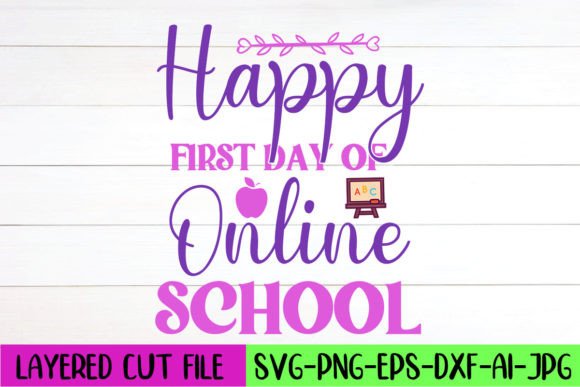
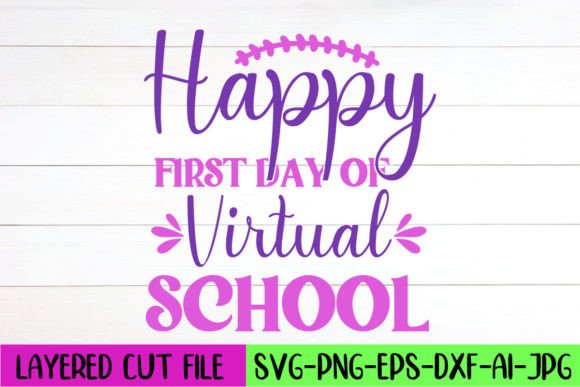
The mood of the design strikes a balance between celebratory and practical. It captures the unique modern milestone of virtual learning without feeling overly cluttered. Visually, it suggests a layout that would work beautifully as a centered chest placement on a sweatshirt embroidery project or as a prominent focal point on a tote bag design. However, because this is originally a cut file, the transition to needle and thread requires careful planning regarding stitch density and detail retention.
Real-World Application: The Custom Sweatshirt Test
To truly evaluate this asset, I mentally placed it in a current production scenario: creating a custom "Virtual School Survival Kit" bundle for a local boutique client. This project involves a heavyweight cotton fleece sweatshirt and a matching canvas tote. In this context, the Happy First Day of Virtual School SVG serves as the anchor design.
For the sweatshirt, the design’s bold shapes lend themselves perfectly to a combination of satin borders and fill stitches. Fleece is a forgiving fabric, but it can swallow fine details. Because this graphic was designed with cutting machines like Cricut and Silhouette in mind, the lines are likely optimized for blades rather than needles. This means that when converting to an embroidery file, I would recommend simplifying any intricate interior details into broader color blocks. A running stitch outline combined with a tatami fill would maintain the graphic integrity without causing puckering on the knit fabric. The result is a personalized gift that feels high-end and durable, rather than stiff or bulletproof from excessive stitching.
On the canvas tote, the application shifts. Here, the design could function as a raw-edge applique using the SVG as the cutting template, secured with a decorative blanket stitch. This hybrid approach leverages the product's original intent while adding the tactile value of a handmade product. Customers respond well to this mixed-media look; it increases perceived value and distinguishes your small shop product from generic print-on-demand alternatives.
Navigating Fabric Variables and Technical Constraints
While the Happy First Day of Virtual School SVG is versatile, it demands respect for material limitations. Not every surface is suitable for this specific aesthetic. I advise caution when applying this design to highly textured fabrics like terry cloth or ribbed knits unless you are using a heavy water-soluble topping. The clean lines characteristic of school-themed graphics can get lost in the pile, making the finished product look muddy.
Stretchy performance fabrics also present a challenge. If you are placing this on a lightweight polyester tee, the stabilizer choice becomes critical. A cut-file-style design often has distinct, separate color blocks. On stretchy material, poor registration between these blocks can ruin the professional appearance. Always use a fusible poly-mesh or adhesive spray to prevent shifting. Furthermore, be mindful of hoop size. While the vector can scale infinitely, your machine cannot. Before committing to a large jacket back print, verify that the design maintains legibility at smaller sizes if you intend to use it for baby embroidery or sleeve cuffs. Tiny lettering in the phrase "Virtual School" may need to be resized or replaced with blockier font variants to ensure stitch clarity.
Commercial Viability and Brand Consistency
For creative entrepreneurs, the true test of any graphic is its commercial flexibility. Does the Happy First Day of Virtual School SVG help sell products? Absolutely, but only if presented correctly. High-quality printable mockup images are essential here. Because the package includes a high-resolution PNG and JPG, you can create realistic digital previews for your listings before stitching a single sample. This saves time and materials while allowing you to gauge customer interest.
However, brand consistency matters. If your shop specializes in vintage aesthetics, this modern, clean-line graphic might feel out of place. Conversely, for shops focused on modern parenting, teacher appreciation, or back-to-school niches, it is a strong contender. When selling custom apparel or holiday embroidery items derived from this file, ensure your photography highlights the texture of the stitches. Buyers need to see that this isn't just a digital download; it is a tangible, quality-crafted item. The inclusion of multiple file types also opens doors for bundling; you could sell the physical embroidered item while offering the digital cut file as an upsell for DIY customers, maximizing the ROI on your design assets.
Essential Designer Notes for Success
Before launching this design into your production queue, adhere to these practical checkpoints to ensure professional results:
- Test Stitch on Scrap: Never run a new conversion directly on a final garment. Test the thread colors and density on a scrap of the exact fabric you intend to use. What looks good on screen may pull too tight or gap on actual cloth.
- Verify Licensing: Although the product description lists compatible software and file types, always double-check the specific commercial license terms regarding selling finished goods versus reselling the digital file itself. Protect your craft business by knowing your rights.
- Contrast Check: Evaluate the design in black and white before coloring. If the design relies solely on color contrast rather than value contrast, it may fail on dark fabrics. Ensure the satin stitch outlines provide enough definition against navy or black sweatshirts.
- Simplify for Scale: If adapting this for a small 4x4 hoop or a baby embroidery project, manually remove tiny elements. Less is more when scaling down vector art for needlework.
- Mockup Variety: Use the included PNG to create mockups on both light and dark backgrounds. Customer trust builds when they can visualize the commercial embroidery outcome on their preferred garment color.
The Happy First Day of Virtual School SVG is a robust starting point for makers and decorators. By treating it not just as a cut file, but as a blueprint for textile art, you can transform these digital layers into profitable, cherished keepsakes. Whether you are crafting a digital embroidery file collection or stitching out samples for the upcoming season, success lies in respecting the interplay between the pixel and the stitch. Approach this design with technical intention, and it will serve your creative enterprise well.