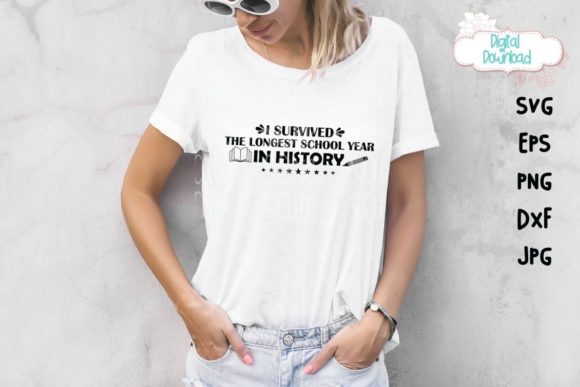
Last Day of School SVG: I Survived Design Review
As a professional designer and embroidery product reviewer, I approach every new graphic asset with a specific question: will this actually translate into a high-quality stitched product? When evaluating the Last Day of School Svg, I Survived Svg, my focus shifts immediately from digital aesthetics to physical application. This design captures a universal sentiment of relief and celebration that resonates deeply with parents, teachers, and students. However, in the world of machine embroidery design and apparel decoration, emotional resonance must be matched by technical viability. My initial impression is that this graphic possesses the bold clarity necessary for successful digitizing, but its versatility across different mediums requires careful consideration of stitch types and fabric choices.
Translating Digital Graphics to Stitched Reality
The "I Survived" theme inherently suggests a playful, slightly distressed, or bold typographic style. In digital graphics, these textures are effortless. In an embroidery file, they require strategic planning. When I review this Last Day of School Svg, I Survived Svg for real-world use, I am looking at line weight and negative space. For a custom apparel project like a teacher appreciation sweatshirt, the design needs enough substance to support a satin stitch border without becoming too dense for comfortable wear. If the original SVG features intricate grunge effects or thin connecting lines, those elements must be reimagined as running stitches or removed entirely to prevent thread breaks during production.
For small business owners and Etsy sellers, the visual personality of this design dictates your target demographic. A clean, modern interpretation works beautifully for boutique branding and minimalist tote bag designs. Conversely, a more whimsical, hand-lettered version appeals to the personalized gift market for baby embroidery or elementary school milestones. The mood created by the shape and layout should align with your shop’s aesthetic before you commit to digitizing. As a digital embroidery file, it offers flexibility, but as a finished product, it demands intentional styling to avoid looking generic.
Real-World Application: The Teacher Tote Bag Test
To truly evaluate this asset, I mentally place it in a specific scenario: creating a premium canvas tote bag for a retiring educator. This is a classic handmade product where durability and legibility are paramount. Using the Last Day of School Svg, I Survived Svg on untextured canvas allows for crisp fill stitches and sharp lettering. In this context, the design serves as the focal point. I would recommend testing the design on scrap fabric first to ensure the stitch density does not cause puckering on the heavy canvas. Because tote bags endure significant wear, the embroidery must be anchored securely.
If adapting this for a lightweight summer t-shirt, the approach changes drastically. The same design that looks robust on canvas might distort a jersey knit. Here, I would advise reducing the overall stitch count and utilizing a lighter stabilizer to maintain the garment's drape. For craft business owners selling seasonal merchandise, understanding these substrate-specific adjustments is what separates amateur outputs from professional commercial embroidery. The design’s success depends entirely on how well you adapt the source SVG to the physical limitations of your chosen blank.
Navigating Fabric Limitations and Hoop Constraints
Not every surface is friendly to detailed typography. When using the Last Day of School Svg, I Survived Svg, you must exercise caution on textured fabrics like terry cloth towels or fleece blankets. Fine details in the "Survived" text can easily get lost in the pile of the fabric. In these instances, simplifying the design into a bold applique design format often yields better results than attempting to replicate every vector line with thread. Similarly, stretchy performance fabrics require specialized stabilizers and potentially a reduced design size to prevent tunneling or distortion after washing.
Hoop size is another critical constraint. While the high-resolution files allow for scaling, embroidery has physical limits. If you intend to use this design for an embroidered patch or a left-chest logo on a polo, verify that the smallest text remains legible at that reduced scale. Tiny lettering often fails when converted from SVG to stitch data because the needle cannot accurately render serifs or tight curves below a certain height. Always confirm hoop size compatibility and inspect small details in your embroidery software before stitching. Dark fabrics present their own challenge; ensure your thread colors provide sufficient contrast so the message reads clearly from a distance. Testing black and white mockups can help predict visibility issues before wasting materials.
Professional Standards for Commercial and Personal Use
Visual appeal directly influences customer trust and perceived value. A sloppy stitch-out of the Last Day of School Svg, I Survived Svg reflects poorly on your brand, regardless of how beautiful the original graphic was. Professionalism in handmade products comes from consistency. This means checking thread color contrast against various fabric backgrounds and ensuring the design assets you purchase include clear usage rights. Before listing any finished product or digital download, confirm licensing terms to protect your business. Customers engaging with holiday embroidery or end-of-year gifts expect flawless execution; registration errors or tension issues caused by poor digitizing will lead to returns.
For creative entrepreneurs using this design for printable mockups or social media previews, remember that the digital representation should match the physical capability. Do not advertise a level of detail that your machine cannot achieve. Authenticity builds buyer engagement. When marketing this as a personalized gift option, showcase actual stitched samples rather than just digital renders whenever possible. This transparency demonstrates confidence in your process and helps manage customer expectations regarding texture and sheen.
Essential Designer Notes for Successful Execution
Before integrating the Last Day of School Svg, I Survived Svg into your workflow, adhere to these practical guidelines to ensure project success:
- Extract and Verify: Before using, you have to extract unzip the files to access the high-resolution assets. Ensure all components are intact before importing into your design software.
- Test on Scrap Fabric: Never run a new design directly on a final product. Test stitch density, tension, and stabilizer pairing on a similar material swatch first.
- Evaluate Text Legibility: If resizing for small items like baby clothes or caps, measure the text height. Letters under 4mm may require simplification to stitch out cleanly.
- Check Stabilizer Requirements: Match your backing to the fabric weight. Knits need cut-away stabilizer; wovens generally perform best with tear-away options.
- Review Color Contrast: Simulate the design on both light and dark backgrounds digitally to ensure readability across different product variations.
- Confirm Licensing: Verify whether the file permits commercial sale of finished goods or if it is restricted to personal use only.
- Inspect Vector Quality: High-resolution SVGs are ideal, but check for open nodes or overlapping paths that could cause erratic stitching behavior.
Ultimately, the Last Day of School Svg, I Survived Svg is a versatile asset for the Crafts and Graphics category, provided it is treated with technical respect. Whether you are producing custom apparel for a local school district, creating inventory for an Etsy shop, or making a sentimental keepsake for your own child, the transition from screen to stitch requires diligence. By prioritizing fabric compatibility, appropriate digitizing techniques, and rigorous testing, you transform a simple digital file into a cherished, tangible memory. The best embroidery projects are those where the technical execution is invisible, allowing the emotion of the design to shine through completely.